Learning to move

I stop running the day I learn I must move house. It’s not for lack of wanting. At first, I tell myself I’ll continue to take advantage of this beautiful spot until the day I leave. I think I’ll do a double loop of the Bay run before I’m out and continue my laps up and down the canal after work. I dream of last year’s winter morning sprints in the park: early sun, dew on the oval, shoes grassy, tapping them over the balcony and watching the mushy blades scatter while I breathe mist.

It’s summer now, and the landlord’s request is to vacate by late autumn. But because the days are still sticky, I find they elicit the same, forever alluring excuses for why I shouldn’t move my legs: too hot, too tired, too unbothered, too old, too late, and of course, a waste of precious moving prep time. If I save up all those hours of running and put them towards packing, just imagine what better place I’ll be in when I move! I am convinced that I am suffering alone (people have offered me help), that it’s too demanding (I haven’t packed a single box), and that I have no time to prepare (I have been given four months’ notice). Instead of running, instead of planning, instead of packing, my weekends largely consist of me staring dumbly into space and avoiding thinking about anything practical.

As things do when one remains in denial, life piles onto itself. The summer gets swallowed up by a family member’s cancer diagnosis, and time fills with scrambly rushing to and from medical appointments, googling best and worst-case scenarios, navigating family politics and practicing diplomacy. By the time autumn rolls around I’m emotionally and mentally fatigued, yet rather than commence the arduous task of packing, I find myself struggling to keep my government job and get caught up in the throes of applying for a permanent contract. To relieve the stresses of what is becoming a messy and demanding year, I reach out to an old partner and before I know it, find myself falling into familiar but unhealthy attachment habits. With three weeks to go and counting, cancer surgery, a job interview and a difficult ‘goodbye’ are all on the cards and although it’s a five minute walk away, the park feels endlessly out of reach.
Two days before the move, I express my concern to an aunt and uncle, though not without a significant downplay of the situation. Yes, I am stressed, but I do have it mostly under control, and yes it’s a hard job, but sure I’ll be ready for the move, and yes, I’ve rejected everyone’s offer to help so far, but no, no, not at all, I won’t mind if you want to stop by and lend a couple of hours of your time, if you insist. In desperation to appear more prepared that I am, I shift some big pieces of furniture, dismantle my bed, pack away some books, and wrap my mattress. It’s a sweaty job, which makes me think the hard part is over, and I am feeling bolstered when help arrives. Perhaps there won’t be much to do after all! After a quick turn around the house, my kind aunt and uncle observe that I don’t have enough boxes. Really? I hear myself say, before making some feeble excuse about throwing things away. Then of course, there’s the untouched kitchen. What was the plan there? I confess there wasn’t one – there still isn’t. And how about the loose bits and pieces on the bookshelf, vases, frames pictures, candles? The time to panic has passed. My uncle makes an emergency trip to bunnings, my aunt finds the bubble wrap for delicates and I am relegated to the kitchen to sort through everything I have avoided for the last four months. And as the world around me is pulled down and boxed up, I find that not only had I decided to give up running temporarily, but realise I have no longer been yearning to return to it.

Things vanish into storage. Although it’s me supervising the filling up and locking away of the unit, I feel so removed from the process that, when it’s all gone and I’m handed the key, I want to cry after my things as if I have no idea where they’ve been taken. I practice the alternative, which is meditating and trying to enjoy the idea of living with less. To my horror, my pile of meagre belongings quickly accumulates the moment I know I’ll be settled for a few months in my childhood room at the family home.

In the now dark, winter mornings, I force myself to wake early so I can make the long trek into work. At first, I do this daily and tell myself it will be good for me, the trip from sleepy suburbia to the happenings of the big city. However, things get slightly out of hand when, after fourteen days, I realise I haven’t spent a single one of them at home, and I find myself beyond exhausted at the eternal commute I’ve trapped myself into. I’ve found the train comfortable — it allows me to practice being restless without being able to tangibly act.

My childhood room is painted a blue so blue it’s uncomfortable to look at, let alone sleep in. I remember once being so proud of it, a radical room colour, the envy of school friends. When I was older, and it was time to repaint, a family friend took me to pick out a new shade. Of the thousands to choose from, I managed to find one nearly identical — a slightly greener tinge perhaps? Thirty-year-old me berates my younger self for being unable to master a sensible choice at fifteen, as consequently I’m stuck in an opaque tropical ocean that I have not asked to holiday in. Even with the blinds wide open, the light does not bounce off the painted walls. The sun loses itself in the colour, and the room feels mournful at all hours of the day.

So, it’s in between all those things: the endless train rides, the escapes from the family home, the painful blues. In between living back with parents when you thought you were fully grown enough to never need to go back. In between the weight of life sitting squarely on your chest, keeping you down so you can’t sit up in the middle of the night to take a sip of water. In between any other semblance of life routines, self-discipline and healthy habits, where there is never much time left to think about filling the void. In between those in betweens, I try to catch glimpses of who I might be if I were to, freely and without malice, teach my hard-to-get-moving legs, how to put one foot in front of the other again…

The first time it happens is by accident, one cold morning on my way to the bus stop, the first leg of my journey to the city. According to google maps the bus is three minutes away, while my walk is another five. I don’t have time to do the mental maths, but I do have time to take a breath, hold the straps of my backpack tight, and commence an energetic jog down the street. When I turn the corner and see the bus coming the other way, I break out into a full sprint. I wave at the driver, hailing him down as he passes the roundabout and turns onto McCulloch Road. The next few seconds, I decide, will become crucial. If I can make it to the intersection, and the bus is still standing, I have one more opportunity to wave, be seen by the other passengers (not that they would necessarily plead my case to the driver) and carve out a path through the wet grass in my heeled boots. 

I board in a hot sweat, gulping down warm, bus heater air. I sit beside an unsuspecting, lazing school student who is taking up one and a half of the two-seaters, and plonk myself down. I don’t even remove my bag or take off any layers which are now surely sticking together, just sit numbly for a while, as the bus I made a life-altering, committed race for stands with its engine on for another two minutes. By the time we move, I feel my breath returning to normal and with it, a fresh feeling, a realisation: I am exhilarated by the fact I can move my body, my legs, my lungs — that they still work for me in this way is a miracle. When I arrive home that evening, the first thing I do is take out my running shoes, which I had the foresight of saving from storage, and try them on; that they are more comfortable than I remember is delicious.   

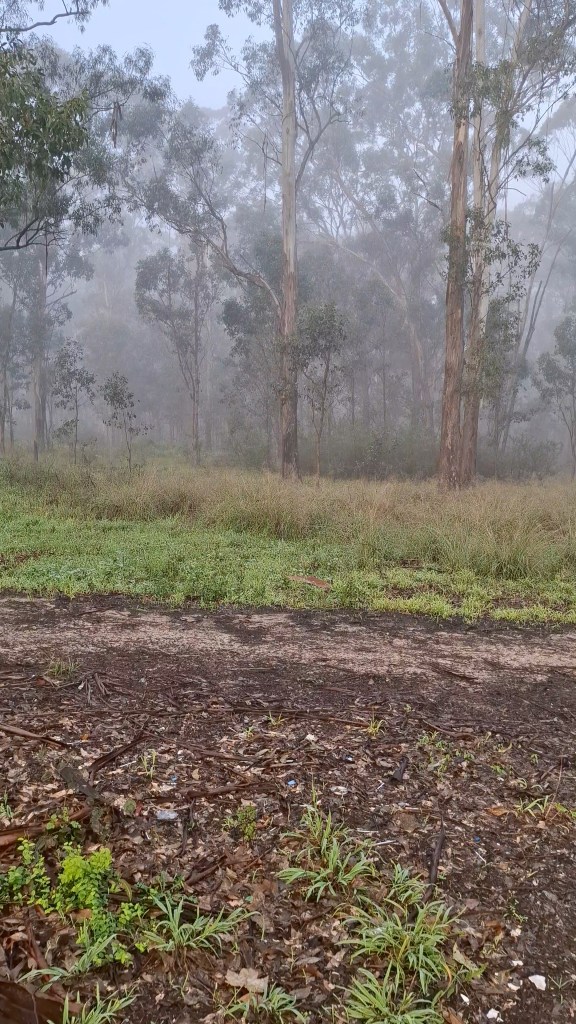
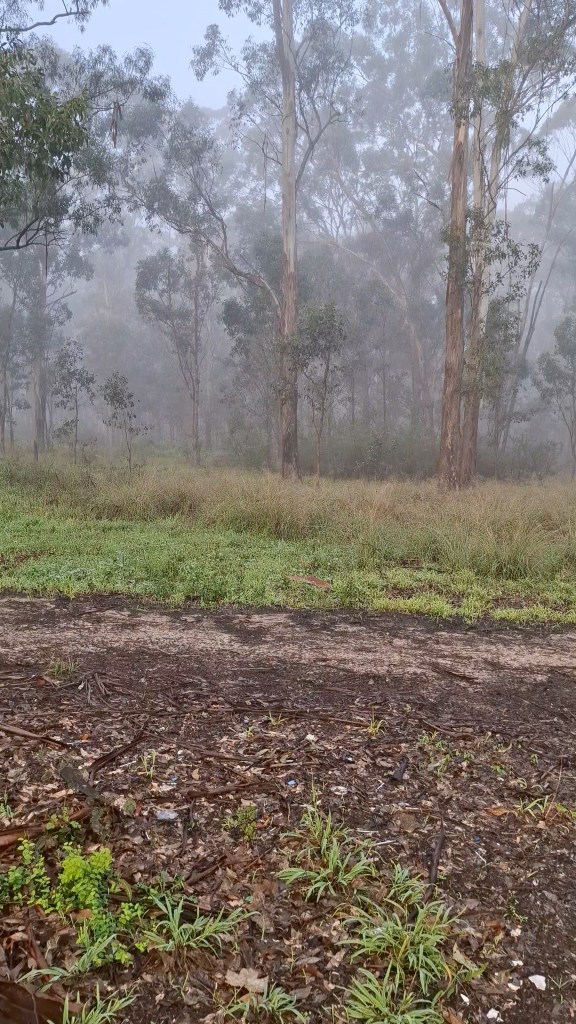
Something about the shivering I get from the cold the morning I dress for a run makes me feel I am appropriately anxious and adequately excited. Throwing together a couple of thin layers, I deprive myself the luxury of heating the kitchen and shove half a banana into my mouth, followed by a couple of orange segments for citrusy freshness. I do some squats and take a meditative breath before emerging onto the quiet street. The fog assures me that no-one is out at this time, and I’m emboldened by the idea that it’s my shoes alone that will be treading the damp litter fallen from the scrub. I move through the bushy reserve on my way to the newer part of town, which boasts large, double-storey brick houses, manicured soccer fields and, most importantly, a lake, all of which I can run laps around. The song of currawongs and cockatoos underscore the crunchy sounds of my footfalls, while crows wail at each other knowingly. The winter has caught me by surprise, but now, here, in movement, I am also alive. 
The room next door — Review

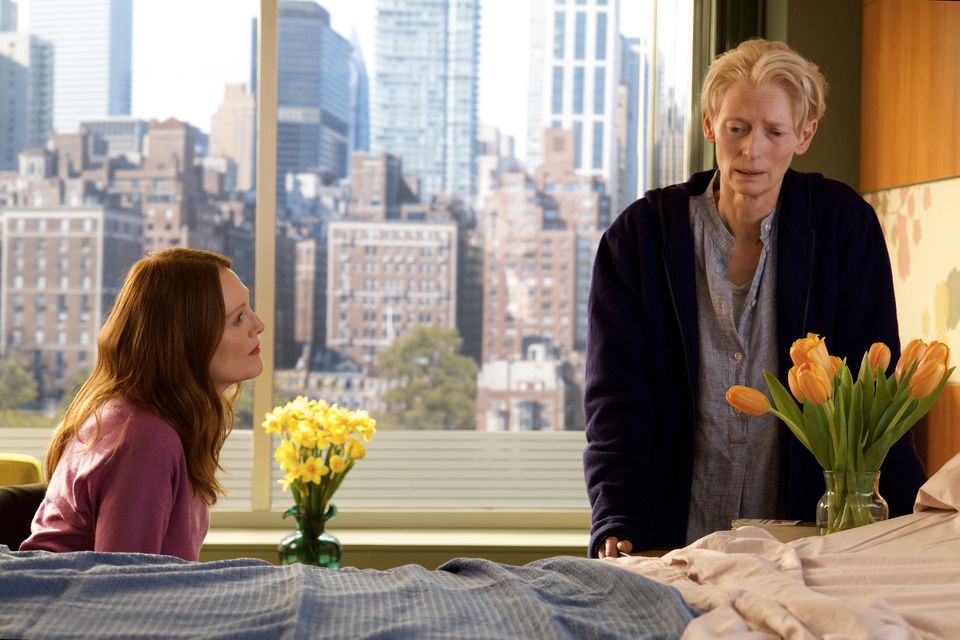
When Ingrid (Julieanne Moore) learns of her friend Martha’s (Tilda Swinton) cancer diagnosis, she wastes no time in visiting her.  It’s been years since their last reunion, but they greet each other warmly in Martha’s private room in a New York hospital. Martha is gaunt and white but glowing (in a way only Swinton can manage!). Her hospital room is warm, looking like the inside of an afternoon, full of flowers, and a beautiful view of the city scape is visible. ‘You seem in good spirits,’ Ingrid says during their conversation, and the gentle naivety of her comment deflates Martha somewhat. Martha confesses that she almost didn’t want to be treated at all when she first found out, she was ‘ready to go!’ But Ingrid remains optimistic. And so, begins the delicate evolution of the pair’s conversations about and feelings for Martha’s impending death. Moore is stunningly grounded. What starts as Ingrid’s love and concern for her friend quickly becomes a stern confidence and dedication to their friendship. She does this so elegantly, and the transformation is fast, almost unwavering. When, after another failed attempt of beating the cancer with treatment, Martha asks Ingrid if she would help her die, Ingrid is understandably stunned and emotional but attentive to her friend’s request. The conversation ends with Ingrid saying she ‘has to think about it.’ By the time she’s downstairs getting into a taxi, she has made up her mind.

‘Ingrid and Martha in hospital’ Pedro Almodóvar, The room next door, 2024

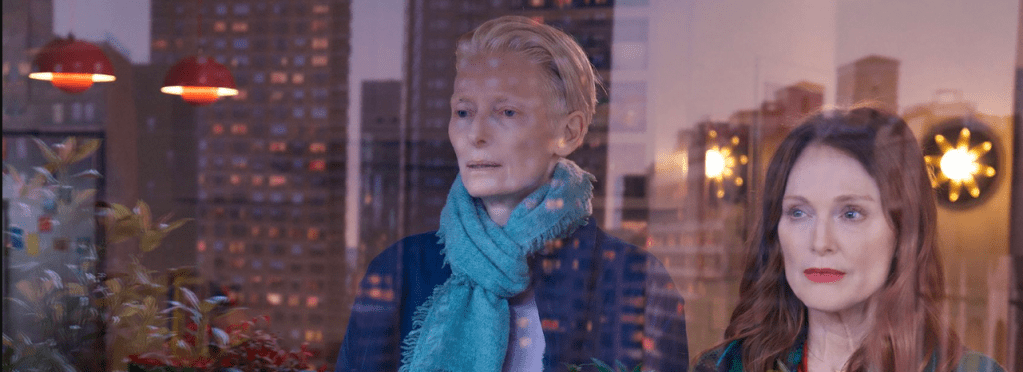
Although the audience may glean some closure from Martha’s dignified death, the film is far from celebratory. We feel, as does Martha probably, that her dying is a kind of burden, not just on her, but on those around her, namely Ingrid. Despite this, director Pedro Almodóvar relishes in using elaborate offerings of fresh fruit to adorn certain significant settings. When Ingrid is first invited to Martha’s apartment, she seems to have an endless supply of grapes, apples, peaches. And when the pair arrive at the house in which Martha is to die, they have a similarly generous quantity. Even at the end of the film when Martha’s daughter, Michelle (also played by Swinton) arrives to see her dead mother, the first thing she is offered by Ingrid, and eats, is fruit. Unlike Elena Ferrante’s novel and subsequent film, The lost daughter, where the living character is haunted by quickly decaying fruit, it’s significant that the visual of fruit in The room next door appears to be used more optimistically, reminding us of vitality in a film that is so heavily about death. Though aware of her demise, Martha chooses to hold on to, and then let go of, life as she feels is appropriate. Coupled with fruit is the recurring use of windows, and their corresponding views from which Martha watches the world around her. Martha’s apartment, like her hospital room, offers a similarly stunning view of the cityscape, although nothing compares to the 360-degree view of the forest from the secluded house in which Martha says her final farewell to the world. The breeze, the birds, the pink snow: all features of the landscape which continue to make their way into the rooms via open windows and doors.   

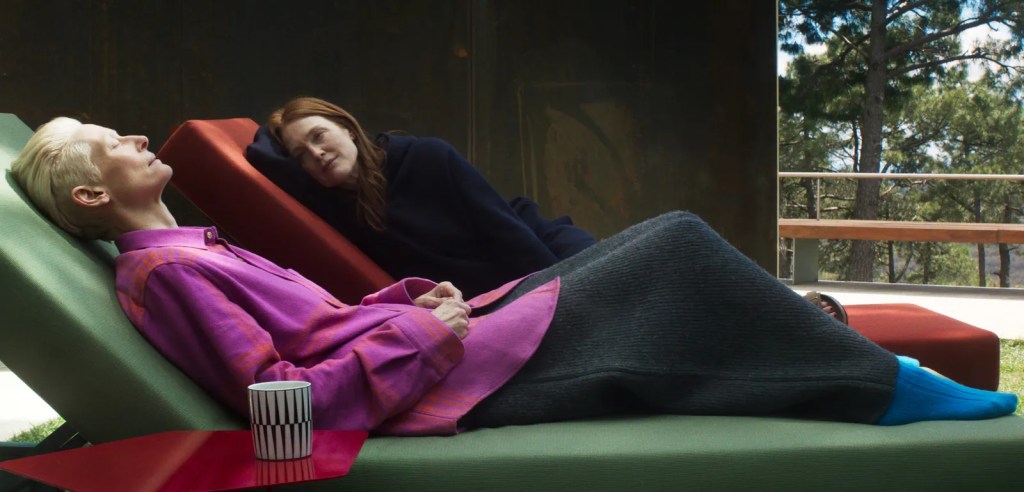
Both Martha and Ingrid are single throughout their time together, and I wonder if this allows them to develop a unique kind of intimacy. If even just one of them were in a relationship, maybe the space between them would not have been so close — Martha may have had someone to help her die without calling on a friend, or Ingrid may have been talked out of her decision to help. The film emphasises the friendship between the two, but still leaves space for possible and plausible readings of other aspects of their relationship. The small gestures of reassurance through touch, language and eye contact means that the friends share a gaze that is almost equal to, if not more intense than, lovers. Ingrid’s signature red gloss lipstick, part of Almodóvar’s intense colour palette, is adopted by Martha a few times in the film, most notably when she readies herself for death by dressing up in bright, penetrating colours. Whatever has been said between the two remains between them only, a pact, a secret, a promise. The life which Ingrid embodies so beautifully, transfers so movingly to Martha on her deathbed out by the pool, in the elements which have always intrigued and wondered her.   

The speed at which Ingrid and Martha reconnect, seems radical, but not impossible. The two women who had worked together many years ago and who haven’t spoken in years have a fierce and fast transformation, which can only be attributed to Martha’s illness and subsequent request. The deeply intimate information which Martha reveals to Ingrid is shocking because, unlike two friends who may have known for ages and would have probably known these details more intimately, Ingrid is largely unfamiliar with Martha’s past, her experience with motherhood, the father of her daughter. It’s also important to remember that by the time Martha’s desperate attempt to ask Ingrid for help comes around, she has already been abandoned and rejected by ‘others’ who had been — and we can only guess here — too afraid, or too judgemental, or too busy, or too self-centred…. And yet, while Ingrid is afraid, she does not lack courage. A writer herself, it could be understood that she has an ability to empathise with experiences that are not her own, in a way that is deeply sophisticated. Ingrid doesn’t accept the invitation to help Martha die purely because the two are friends, she does it because it is the moral thing to do.

‘Observing the view from Martha’s apartment’ Pedro Almodóvar, The room next door, 2024

Martha’s careful plan to die while Ingrid is  ‘the room next door’ never eventuates. She envisioned her readiness for death had always involved companionship — as she reminds Ingrid, even when she worked as a war correspondent, they always had someone with them when going into dangerous or unknown territory. And yet, when Martha does die, she manages to transcend her wish by deciding to take her final pill when Ingrid is out of the house. In her final letter to Ingrid, she notes that it was somehow a comfort to her, knowing that she was out in the world, living her life, doing her own thing. The magic of accompaniment is that it can take different forms and through her sheer commitment to ‘being there’, Ingrid helps Martha realise that although she must die alone, perhaps she doesn’t need to face her death alone.  

Martha is dying, but she is also immensely privileged. She has the means to access comfort for her final moments. It’s complicated, and in no way straightforward, but her wit, capital and friendship with Ingrid are the only way in which she has been able to make it happen. After Martha’s death Ingrid is, as predicted, heavily interrogated by the police who suspect her complicity. Thanks to her own pragmatism, initiative and foresight, Ingrid ensures she has a lawyer is on hand to support Ingrid, who only after this intervention is dismissed by police, a move that even Martha didn’t think to prepare her for. There is no mistaking how deep the ideologies behind death and its circumstances run in this part of the world. Had Ingrid been anything other than astute and well connected, we would have witnessed an entirely different drama.

The film eloquently addresses dying with dignity at a time we would like to go And yes, we find ourselves contemplating death, perhaps of those we know and have already gone, or those who have had a close encounter with it, or maybe even our own. But in order to fully comprehend the gravity of the entire film, we cannot leave the cinema without meditating on the unique nature of Martha and Ingrid’s friendship: Martha’s frank request for help, and Ingrid’s steadfast loyalty, the unique and solemn bond between them.   Death itself, although  central to the narrative, is not the tragedy, rather it is the strain of responsibility which Ingrid bears as the sole support. When, in the leadup to Martha’s death, Ingrid meets a friend with whom to disclose her situation, she is advised admirably ‘You’re the only person I know who doesn’t make others guilty about their suffering.’ And it’s true, Ingrid has suffered. Not the cancer or the subsequent gruelling battle, but the sole brunt of keeping her and Martha’s sanity intact while they navigate the terrain of euthanasia in a country where the death penalty is widely allowed across the country, but it’s illegal for a person to determine the quality of their death and, by extension, the people they choose to support them through it.  

‘Martha and Ingrid on the daybed’ Pedro Almodóvar, The room next door, 2024

Almodóvar’s film is stark in its messaging, poetic in its delivery and brutal but beautiful in its storytelling. It’s difficult to leave this film without meditating on death, if not that of others, then of our own. In the film’s final moments, Michelle meets with Ingrid at the house where Martha has died. Played too by Swinton, the appearance of Michelle is almost funny, who dons the same pale complexion, but whose face is framed by an auburn crop instead of her mother’s short white hair. Taking a bite of the fruit which Ingrid has offered, she discards the green top of a strawberry on the kitchen counter, listening earnestly to her mother’s closest confidante. With Swinton refusing (symbolically) to leave the film, embodying now her daughter, it isn’t that Martha is still ‘present’ — her death is in some ways the most certain thing about the film. Instead, Swinton’s return to the screen feels like a forceful reminder that we are engaged in a piece of fiction. The Martha we came to know was never really there, and the bodily vehicle through which Martha’s story has been told will continue now to tell the stories of others. And it’s a reality that the characters must come to terms with, in the same way that audiences will come to terms with death in their own lives. Once someone is gone, our way of remembering them is through recollection and story, always told through and by others. If, after death, we have no control of how our life is portrayed, what a privilege then for an individual to determine their final moments.

A gracious ride

Someone recently suggested to me that the hallmark of a good person is one who practices tactful public transport etiquette.

This is such an adept measure of human behaviour. It’s true: whenever I see someone on the bus who conducts themselves with grace and politeness, I feel I am instantly attracted to them, and not necessarily in a romantic sense (although that may sometimes be the case)! My affection comes from actively witnessing the kindness of the human spirit. 

In that regard the bus during peak hour can be a sacred place, however, like most things in life, it requires maintenance, constant refining, repetition and patience. Generally, it means adjusting your bag to accommodate a fellow bus mate, altering your posture to make space for another body when it takes a seat beside you, gesturing thanks to the person who needs to move for you so you can get off the bus. And of course, yes, you must be willing to press the button for someone when theirs doesn’t work, stand up for someone who needs to sit more than you, and acknowledge the driver when getting off your stop.

The beauty of this simple practice is that, once mastered, you can apply the behaviours to a thousand other small, daily acts. When running, for example, which I prefer to do in public spaces, I often find myself judging the character of a runner on whether they nod a hello, or smile an acknowledgement, or avoid the path by running on the grass for a moment to avoid slower pedestrians on the path. And while running may differ in the sense that many runners are focused on the path ahead, and smiling might seem strenuous, it goes a long way. Sometimes I find myself wondering whether I can pick out the same degree of what makes a person ‘good’ out at the Bay Run as easily as I can on the bus on the way to the city at eight in the morning.

Wouldn’t we be better placed in our cities if we followed these rules? And what if we carried these practices into our homes, our relationships and our work?

Think of the invisible, be courageous, practice the sacred, and love your humanity.

A curve is a broken line — Review

I’m often heartened by the sight of other people strolling through art galleries: no agenda, no cause to rush, just taking their time to meander through and pausing at whatever captures their attention. Sometimes the attention is directed towards the artwork themselves, and at others it’s the shuffle of a security guard, the attempt to hush a small, small child on the border of a tantrum, or the gentle pursuit of a friend who has taken off somewhere. These spaces, particularly when constructed with a deliberate social and cultural awareness in mind, can serve as a haven for solo introspection and contemplation.

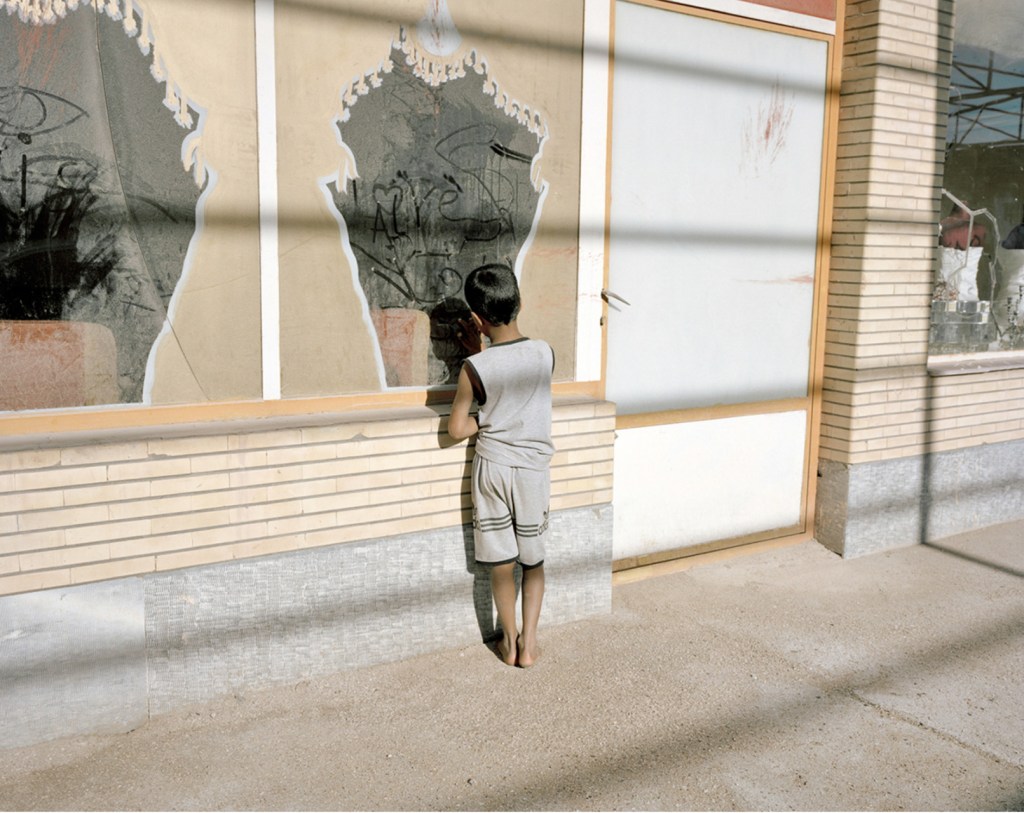
In the exodus, I love you more 2014–ongoing © Hoda Afshar

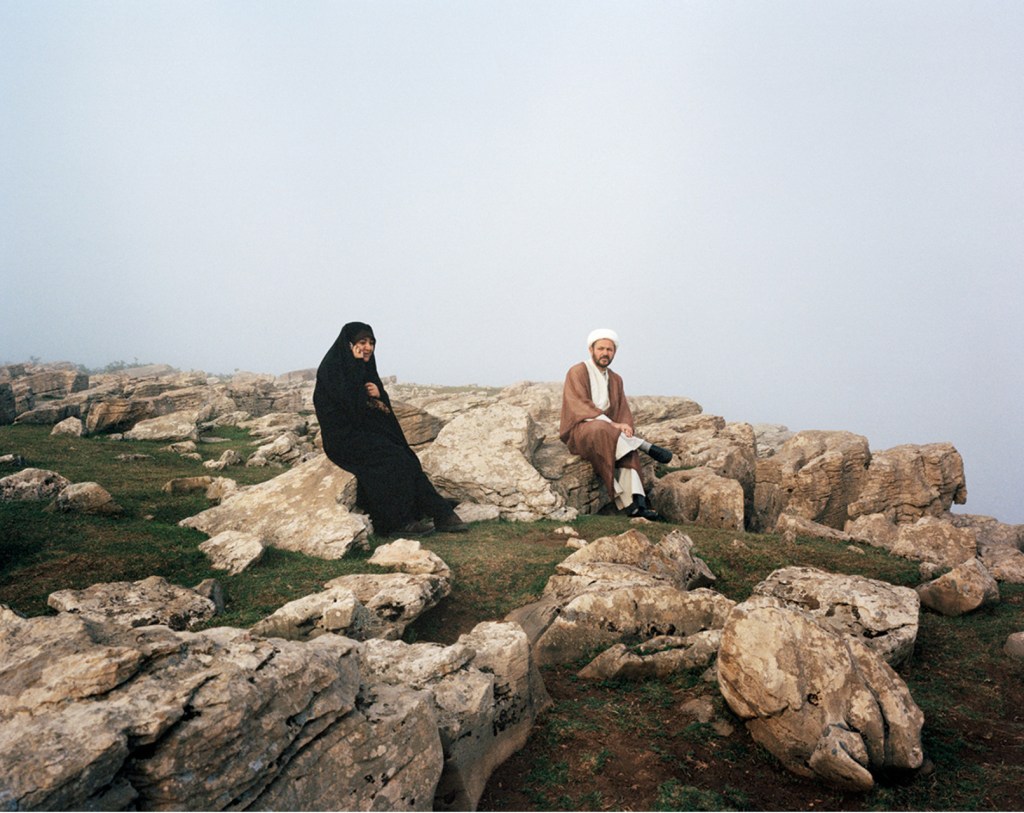
A curve is a broken line was on display at the Art Gallery of NSW from 22 September 2023 to 21 January 2024. I feel lucky that I was able to see it twice in the week it closed. The exhibition showed a series of photography works by Iranian-Australian artist Hoda Afshar including In the exodus, I love you more, Behold and Remain. Her images have a lyrical quality to them. Though every work speaks to a different theme, Hodar treats her subjects (human and inanimate) with great care, almost as if capturing them were a labour of love, regardless of her real-life relationship to them. The image of a young boy inspecting drawings carved out from a film of dust on an old window is just a couple of walls away from the image of a woman inside a religious space, her face obscured almost completely by an unseen source of sunlight piercing through the dark space. The landscapes where her subjects reside are equally evocative. What initially feels like a stark contrast actually somehow compliments the people whom she captures. 

It feels almost simplistic to describe Hoda’s work as purely ‘political’. In maintaining a commitment to the people whose experiences she is sharing, Hoda collects stories for delicate display — they are not to be interrogated or debated or the source of a hot disagreement, even though her work may elicit this. There always seems to be a passion behind the cause which she doesn’t shy away from, and yet, in working to document the intimate struggles and horrors of people in precarious situations, there is something fragile and personal. Somehow it’s as if showing things through the altered lens of her camera has allowed the truth to hit home harder than as if it were a stark depiction of truth. The staged truth is harder to witness than the raw one. 

Untitled #6 from the series Behold 2016 © Hoda Afshar

The images from the series Behold were taken in an unnamed Iranian bathhouse; Afshar was invited by a group of gay men who had asked to be photographed. Despite the threat of persecution, the images are so delicately staged, allowing space for a forbidden eroticism to carefully blossom in the lives of the subjects. It may be tempting to overly romanticise this series or else to be ‘shocked’ by the intimate images, but instead, Hoda serves to remind us that these men are no more virtuous or sinful than anyone else. The portrayal of their carnal instincts act a mirror to those things within us which are often politely suppressed but emerge (or could emerge) in our most private moments.

Still from Remain 2018 © Hoda Afshar

Remain was filmed on Manus Island in Papua New Guinea. The work features several male asylum seekers, including the Kurdish-Iranian Behrouz Boochani and those who lived close to or knew Reza Berati, who was 23 years old when he was killed on Manus during a riot in 2014. One by one, the men walk slowly through the tropical ‘green hell’, the camera following them from behind, as the story of their experience is told in voiceover. This means that while we hear their voice, and the sounds of the forest, we never see their mouths moving. The poetic fragments written and spoken by the men, interspersed with their own personal stories, add another moving layer to the work. As we watch the men walk through the forest, it is with compassion, but it is also difficult to not feel complicit in some way. And so, though spoken calmly, the phrase ‘do not press your foot on me — I will drown you’ becomes as much an expression of resistance in the face of torture, as it does a warning.

In the last few months, global communities have been clouded by a justified obsession with the atrocities of war. And yet, if we consume news by scrolling and swiping, as many of us now do, we are rarely left with the opportunity to reflect but run the risk of being desensitised. Scenes from decimated hospitals filled with the wounded; men led, hands tied and blindfolded, into the unknown; the disembodied voice of a child begging for help over the phone, while gunshots surround her, until the call comes to an abrupt stop. Sometimes these are things we must watch or listen to with uninterrupted, undivided attention, and not interspersed with comparatively trivial content. Often, as painful as it is, we need to sit with the horrors if we are to take appropriate action to address them, however small our actions may be. If we can learn to get in touch with our own suffering as witnesses, we can expand our ability to engage with the enormity of those suffering as victims.

In Remain, one of the asylum seeker men recites, ‘I am a fool who is afraid of the sky.’ Our fear of our own mortality in the face of suffering without end reminds us painfully of our fragile existence. We may all feel insignificant from time to time in the context of the universe, its timeless vastness. But this does not mean a person’s life should ever be made to feel that way at the hands of another. Having lived through the offshore detention at the hands of the Australian government, Hoda’s subjects share a robust but profound reminder that ‘this fool knows one thing well, that he is a beautiful fool.’ Wouldn’t we all be a little better in this world for knowing this too. 

In the exodus, I love you more 2014–ongoing © Hoda Afshar

Empire of Light – Review

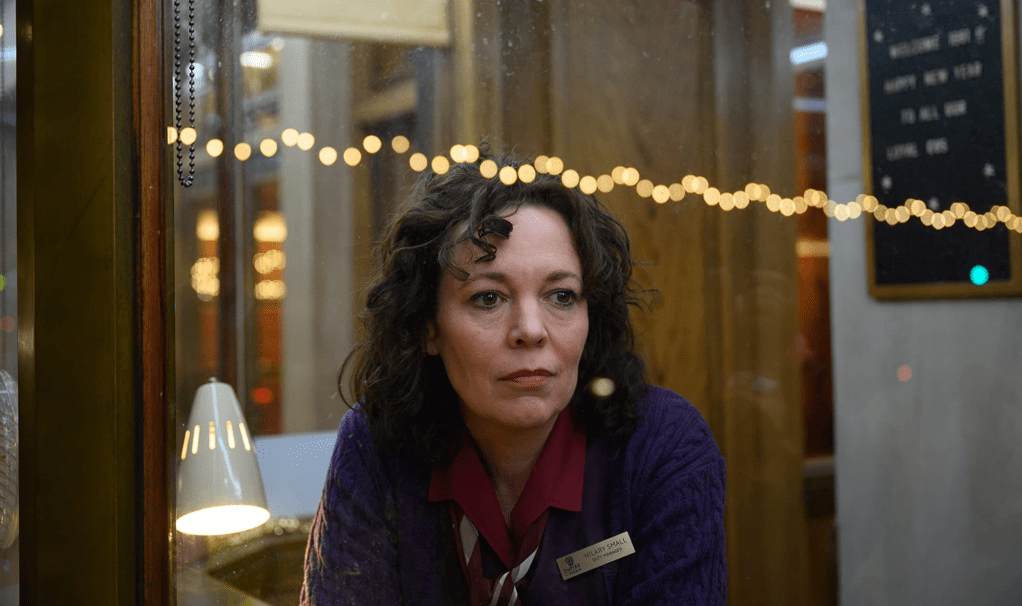
There’s a moment in Empire of Light  when the quiet, unspoken understanding of mental illness is broken. For a moment, the audience become doctors, but by this point, whatever our formal assessment may be it’s too late. After some erratic behaviour from Hilary (Olivia Coleman), the floor manager of a cinema, her boss Donald (Colin Firth) accuses her of being ‘a schizophrenic.’ It’s a low blow, a (perhaps calculated) way of making her look bad in front of his wife, after Hilary has just revealed that Donald has been cheating on her, with Hilary as the somewhat reluctant mistress. ‘The condoms are in the top right-hand drawer in his office,’ Hilary says calmly, before walking away from the chaos, leaving behind her stupefied colleagues, an angry wife, and Donald like a deer in headlights. At this point in the film, there is no denying that Hilary is unwell, but the proclamation of her ‘diagnosis’ hits both Hilary and the audience. It leaves her struck dumb and us wondering: how much of it is fair or true? 

Often, the portrayal of mental illness in film features characters who are not only defined by it, but whose experiences are predictable, and whose behaviour is ‘understood’ by the viewer. From there, it’s easy for an audience to categorise: ‘oh he was obviously quite depressed,’ ‘the character is highly anxious,’ ‘they go insane towards the end,’ etc. It’s not that any of these observations are wrong, of course, we all use shorthands to understand what a character is going through in a film, just as we use these descriptors in real life to make sense of and often legitimise someone’s existential struggles. But what hits differently about Donald’s accusation in Empire of Light is that, while dramatic, we know it isn’t ‘true’ — or certainly not the whole truth. By this point in the film, we understand that Hilary and her experience are complex. It’s too late in the film to pigeonhole her. Whether she is schizophrenic is beside the point; we may have witnessed erraticism, mania, sadness, aggression, but who are we, and more so who is Donald, to diagnose her?

‘Olivia Coleman, waiting at work’ Sam Mendes, Empire of Light, 2022

Empire of Light carries one of the most sensitive portrayals of mental illness I have seen in film in a long time. It’s clear from early on that Hilary is lonely and a bit guarded. There is a hint that, while she may not be suicidal (at least not obviously so), she toys with the idea of death, or at least imagines what it would be like to disappear. At the same time, Hilary is able to speak normally with her colleagues, to enjoy their company even. She turns up to work every day and keeps her house in relative order. She keeps medicine in her cabinet, which we see her contemplate, somewhat regretfully, before taking. We also learn quite early that Hilary sees a psychiatrist, who may be well intentioned in his work but seems a disinterested listener and unattuned to Hilary and her more particular needs. It’s not until the end of their appointment when Hilary discloses, quite offhandedly and in a very understated manner, that she ‘feels a bit low.’    

When Hilary is tasked with onboarding a new employee, Stephen (Michael Ward), a friendship emerges. In many ways this seems due to their respective loneliness: Hilary in recovery from a stint in a psychiatric hospital and Stephen, a young, Black, aspiring architecture student, both of them bound by the constraints and discrimination of a Thatcherite Britain. And while Hilary’s condition makes her feel that she cannot be in the world, that the world is too much for her, Stephen yearns to be in it: to study, to live without fear, to live without prejudice. We see, along with the new friendship, a change in Hilary, a kind of confidence, a renewed perspective on life: she sings, she dances, she laughs. The pair fall into a sexual relationship.  

While the romance does not last, partly because of Hilary’s undisclosed condition and partly because of Stephen’s doubt of their racial difference, their friendship endures. It’s another beautiful quality of Sam Mendes’ film that the complexities of romance and friendship are shown to not be easily distilled or separated. Even after their breakup and Hilary’s dramatic demise, Stephen continues to show concern, and goes out of his way to make sure she is okay. 

At the climax of the film, Stephen finds himself cooped up with an acutely manic Hilary. In her now-shambolic apartment there is a knock from the police. Hilary is defensive at first, steadfast in her resolve to keep the door locked and pretend she is not home. It is not until she hears a familiar voice, a social worker, when we see her aggression dissipate and her face soften. Under Hilary’s instruction, Stephen steps into a wardrobe to hide, while she grabs a suitcase, and sits facing the door, wincing with each barrage as the police force entry to her apartment. By the time the door is thrown open, Hilary is sitting still, and fearful but without fight. ‘Oh look, you’re already packed,’ exclaims the social worker kindly, and without a glance back, Hilary leaves with her entourage. It’s only then Stephen emerges, dutifully having stayed with her until her apprehension, but exhausted and clearly out of his depth.

‘Happy new year’ Sam Mendes, Empire of Light, 2022

At its core, Empire of Light is a film about friendship. Hilary and Stephen’s relationship is explored in depth, but this theme is also highlighted in the collegiality of the cinema staff. They accept Stephen into the fold with little fuss and grow quickly to love him as one of their own. During a brutal attack on the cinema by a violent mob of marching skinheads, Stephen is bashed brutally and to within an inch of his life. Hilary holds him in the ambulance as he is rushed to emergency and waits, faithfully, in a similar way he did for her before she was carried away for psychiatric care. In a moving exchange between Hilary and Delia, Stephen’s mother (Tanya Moodie), Hilary’s sense of shame is eased as it becomes clear that despite Delia’s knowledge of their past relationship, she acknowledges the dedication and friendship that Stephen has so relied on. 

Sam Mendes has offered a delicate exploration of the possibilities and trauma of living with mental illness. Hilary’s struggle makes her sensitive and open to bonding with Stephen, who shows her both kindness and vulnerability. At the same time, her ways of being in and relating to the world are impeded by her illness as she struggles to find the sweet spot between her debilitating downs and dysfunctional highs. Despite this, Hilary doesn’t give up, and it’s thanks to Stephen in many ways that she continues as she does, in her steady, persistent commitment to being alive, which, as we all know, is harder for some than for others.  


Stephen gets a place in University; Hilary is left behind. By this time, their romance has long faded, but their friendship firmly established. How refreshing to feel that it’s the course of a friendship and not a romance that can transform a person. And how refreshing it is to see someone experience illness in a way that bears no obvious and neat resolution but that conversely allows space for optimism and joy in recovery. To write about illness is complex — get it wrong and it will perpetuate stigmatising ideas about what it looks like. Get it right, and those with experience of being or caring for someone who grapples with illness can, hopefully, feel as though their nuanced way of ‘living with it’ is not reduced to a few pills, a manic psychosis, and suicidal ideations. In its own way, Empire of Light is an extension of the friendship it portrays, a reminder that our lives intertwine, and tender, vulnerable experiences of being unwell can be, in the right circumstances, safe to share, our relationships healing and that the stories we tell about ourselves can be recalibrated.

blending ourselves into -barra

To breathe, to dance, to eat, to sing – these are the things that give life substance, meaning and propel us forward to continue living it. 

*

Our meetings begin gently. One by one, people arrive and a small crowd gathers, everyone keen in helping unpack shopping bags with tea and bikkies, coffee cups, sometimes a chocolate, sometimes a kettle and other times sugar, and if you’re lucky enough, a plastic spoon.  

Our choir is called Barayagal. Nardi Simpson, Yuwaalaraay woman, songwriter, storyteller, playwright, legend, friend, offers a beautiful explanation of the first part of the word. 

“ -barra is a Yuwaalaraay language suffix that signifies belonging of people and ownership of a place, a universal truth we assert to all Indigneous and First peoples around the world. It includes Yuwaalaraay creatives and community members as well as other First Nations creatives and non-indigneous performers and friends”


“The foundations of Yuwaalaraay cultural practice ask us to uphold, celebrate and practice our lore in the spirit of generosity, kindness and strength to all. We are expected to be this way – [it] is our cultural obligation and responsibility”    

*

Barayagal is comprised of a warm, diverse group of incidental friends: some of us are seasoned shower singers, some of us are wanna-be belters, many of us curious, some of us shy, all of us living on Gadigal land. Singing Nardi’s songs afford us just a glimpse into her world – they provide a miniscule insight into a culture that predates our own, younger ancestry.   

Singing together is powerful. It’s the power of what gets sung, and it’s the joy of sharing voices with others. It’s also special to sing someone else’s imagination into life, especially when that imagination is so vivid, so personal and so warm. 

Earlier this year, the Barayagal choir joined Nardi Simpson and Ensemble Offspring onstage at the City Recital Hall as part of the Sydney Festival. The show was titled -barra. We wore black and stood barefoot, each of us with a unique beautiful silk dyed scarf, credit to Nardi’s sister, Lucy Simpson. 

While of course, it’s impossible to deny the special experience of singing at such a prestigious venue, more important to me was being able to share someone else’s telling of story, someone else’s expression of land and what it means to them, and by extension what it can mean for us. It’s a privilege, it requires something delicate and it’s a special, unique and meaningful way to connect with others in our world. 

When I sing, I feel safe (even if outwardly I appear insecure). When I sing with others, I feel uplifted. When I sing something that means something to me, I feel like I have a purpose. When I sing, I take the sky into my hands and hold it for a while before I throw it back out into the universe and watch the stars collapse into place in their own dark sky – dying slowly, but living in our imagination as the bright things that guide us forever through a fevered existence. It brings me peace. It brings me the comfort and reassurance that I am real, or at the very least, that my imagined self is having the time of her life, contributing to a dream that speaks to the minds of others. 

The program for -barra- can be found here

There is also a live recording of the performance on ABC’s classic FM program, New Waves: Nardi Simpson’s -barra.


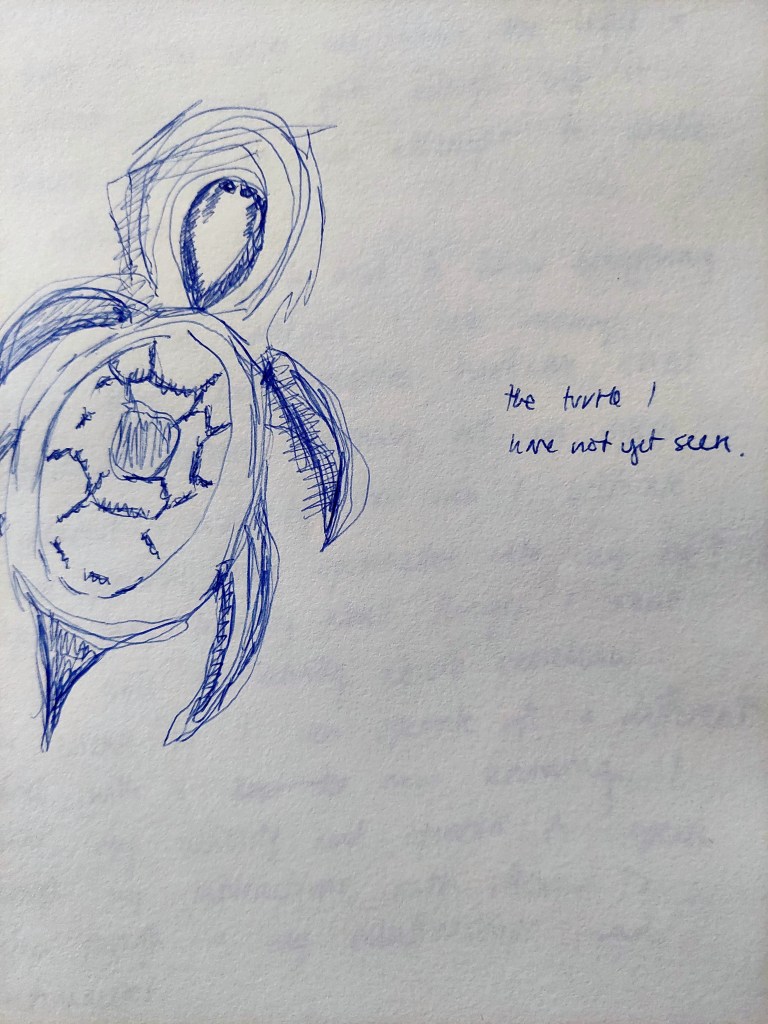
the turtle I have not yet seen

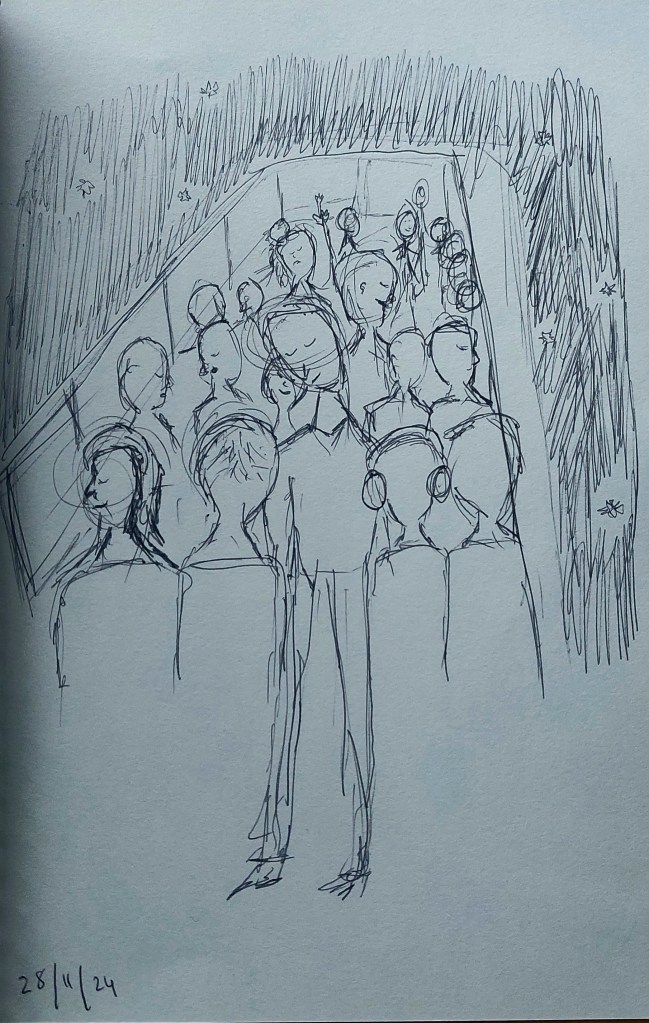
This little sketch was done during a trip to the Northern Territory. We stayed in a small caravan when we visited Litchfield National Park. We swam in waterholes, visited falls and plunge pools, enjoyed the summer in winter and heard many croc stories, but still, we did not see any turtles.

This is the turtle I wanted to see.

Please excuse the faint text behind the drawing. This was penned in my notebook where I usually write my thoughts. I don’t think that particularly diary entry is readable (and if it was, it wasn’t anything important!)

Long live the turtle.

Love hacks and digital healing

For the first time in several years, I found myself sifting through all that wonderful, messy, mix of computer junk. You know the kind: 

Brain fart word documents, university essays, family pictures, amateur model shots, video entries, attempts at poetry, garage band recordings and of course, pirated videos of films and tv shows that you obtained somehow, somewhere from someone (who wants to know?). Or is this just me?  

In that assorted mess, I found a handful of recorded songs, or more accurately perhaps, music videos. These videos were of me on an old keyboard, singing lyrics that I had come up with on the spot – blind, unedited and without much thought. In some of these I’m wearing my pyjamas, and in other ones I’m wearing my work clothes – clearly having just arrived home and having not had a chance yet to change out of the day. They aren’t staged, they are just very intimate little portraits of who I was on the day – where my mind was and how I imagined life at the time.

Much like sifting through my old diaries is often a source of wonder and inspiration for me, sifting through these videos made me feel very full and warm. Of course there was a time I felt passionately about a lover, curious about romance, uncertain about change…And much like sifting through my old diaries, there was something so playful and unstructured in these videos, (at least, not structured by design anyway). 

Maybe when you spend a lot of time floating along, wondering how you got to be where you are, finding parts of yourself from when you were younger can be a real comfort. In this case, it was a video, but these moments become apparent to us in all different ways – through sketches, notes, pictures. Perhaps it’s a bit self-indulgent to spend too much time analysing who “that person” was – but at the same time, how do you imagine where you might like to go when you forget the path that you meandered here on?   

The text below are the lyrics from one of the music videos I found. In it, I’m wearing a bright green knitted top that I still own & still wear to work! It must have been written a short while after my first ever real break-up with my first ever real lover. And although I was still processing heartbreak and loneliness and all that brutality that comes with sudden endings, there was something poised in the way which I sat at the keyboard and sung these, (hopefully) quite clear lyrics, in contrast to the gibberish I usually sing.    

Without wanting to seal my fate as a romance poet – I’m posting this less so about the content of the lyrics, but more so because I found it a fascinating character study. The Gab I was at 24 was so enamored by the idea of a passionate, fierce love and heartbreak, that I felt I couldn’t experience it fast enough. I wanted all of it: the warm, cuddly, good bits and the excruciating feeling of loss. The funny thing was, I got it – I got all of it, even perhaps, more than what I bargained for. It just didn’t arrive in the way I expected. And what happened in the years to follow was similarly surprising – but again, also, in a weird kind of way, what I wanted.

So here’s a shoutout to all the first-time lovers who think they’re treading new ground. If you think no-one’s ever been there before, in a way you’re right. But at the same time, the story has been told so many times, by so many others. This is me singing my verision of the story in my bright green knit top in my cosy room in a chaotic sharehouse, snatching time between work and study to spill my guts to a private camera in the form of a musical diary entry. 

*

I met him by the fireplace
we met when it was summertime
I met him by the fireplace
I said hello and he was mine

I didn’t want to see him go
I didn’t want to say goodbye
I met him by the fireplace
I let him go and then he died

I told him it was all a game
I told him there was more to say
He didn’t want to read my mind
so I painted him and then he stayed

I told him it was for the future
he said that it was in the past
I told him it was for the best
he never wanted it to last

so please in this old age
let me follow, let me strengthen 

where will we go from here, without knowing the rest?

where will we go from here,
where will we go from here 

I met him in the summertime
his hair was warm against my face
I met him when the heat was soft
he never didn’t need to have no race

I didn’t want to break his heart
but he broke mine oh just the same
I met him in the summertime,
in winter he was by my place

this isn’t over not at all
it’s not my end it’s just my fall
it’s not why I’m telling him this at that all is not known

this isn’t over not at all
this isn’t here not he’s not home

this isn’t over by my bed
this is just him and what he said

Writing Kin and Kitchen for the Sydney Review of Books

It’s always a pleasant surprise when someone takes your work mildly seriously. It’s an even bigger surprise when someone thinks that your skills can be developed, and they are willing to put their hand up and mentor you.

Early this year, I was selected as an emerging writer under Project: Incubate to develop a piece for the Sydney Review of Books. I was incredibly excited (and honoured) to have this opportunity. Working on my essay, which I eventually titled Kin and Kitchen, was a wonderful experience, but it wasn’t without its struggles. Writing about family history can be an incredibly personal and intimate thing. How much do you want to reveal? How much do you hide? How much do you want others to know? How much of the story is about yourself, and is the process of writing somehow cathartic for you? How much of the story is about your family, and is their approval or understanding you are trying to gain?

These are many difficult questions, and they aren’t always easy to answer.

I feel relieved to say that my piece was published (after a long, windy and emotional journey)! I’m also pleased it gained a lot of positive attention, mostly from friends and family, but also from a few of my admired lectures whom I encountered when studying at university.

In a strange way, projects like this prompt you to learn as much about other people as they do about yourself.

Many of those who read it have said many lovely things about this piece. Some commented on the way in which the magical realist style was harnessed. Others acknowledged the sophisticated and unexpected ways it dealt with stories of migration. A couple of people also pointed out the ways in which the essay could be improved and polished. To everyone who read it, commented, felt touched, or were prompted to offer a response, I say thank you. Sometimes you don’t know the impact that a piece of creaive work can have on others before it is out there in the world.

So, here it is again, the link to Kin and Kitchen where you can read the full essay on their website. It’s a bit about Peruvian Spirits, a bit about Polish Babcia’s, a bit about migration, and a bit about family cooking. And just in case you want a little prompt to click the link here is a short extract:

While Mum was keeping an eye out on me from the kitchen, I often found myself keeping an eye on her. I may have had full ownership of the driveway but the kitchen was my Mum’s domain. As our kitchen was a large space that opened up into the dining room, preparing the food was often a performance of sorts. Exquisite smells mixed with the sounds of frustrated clanging and running water. Variations of the same question (usually from me) about when dinner would be ready made me think that we were all participating in food preparation, even if this was far from the truth. Mum was a firm believer in ‘wash as you go’ and ‘clean as soon as you can.’ These maxims gave me good practice to carry into my adult life. I learned early on that for Mum, cooking with an absence of clanging meant an absence of enthusiasm, and also that tears before dinner were never a good sign. In a way, being in control of the kitchen was synonymous with being in control.

If you’ve made it this far in the blog post – congratulations! Please see the links posted below!

Please read some of the other essays from Project: Incubate and of course, peruse through the many wonderful essays on the Sydney Review of Books website.

When winter writes itself

Below are some fragments composed at various times during the last few cooler months.

The cold is hard to mentally compete with, but it’s always nice to reflect that “hey, my struggling brain was actually still moving during this time!” (Even if it was mostly whimsical and made little sense)…

*

29th May

At the lower place 

I said I would leave my shoes at the door and go only in my dressing gown.

Besides, what is unusual is also exotic, is also fun, is also an honour. 

I have nothing but my things (of which there are many) and everything, but without them I am lost.

The smallest things remind me of “that place” and the longest things? I have no interest in talking about them.

*

4th June

Every small thing I have gathered, I collected from people on the streets:

Songs, stories, bits of cardboard. They save me the trouble of being committed. 

*

2nd July:

I haven’t had the courage to eat my greens. 

When I look at them, they avoid my gaze but speak to me of all my mishaps and whisper wrongdoings at each other.

So what’s the appeal?

Should I lather them in sauce? Should I drench them in a vinaigrette? Douse them in salt? 

I’ll eat them tomorrow – all the greens will be gone.  

*

I have fifteen pieces of mandarin segments in my hands.

My face smells like sunscreen and on the way home, I draw little citrus bodies and dispose of the seeds by spitting them out on front lawns.

 Perhaps trees will grow in many years and leaves neighbours wondering how giant floods called fruit bearing trees into existence.