First published 2018 with Sweatshop in The Big Black Thing: Chapter 2
When the wind has finally brought her home from her play in the sun, my sister stands confidently in her chubby little frame upon the living room table and begins to dance. Knees bent, bottom jutting out, she moves side to side in a simple Latin two-step, eyes closed as though she is in silent meditation.
I peer at her through a crack in the living room door. The smell of fried beef mixed with onion and fresh tomato fill the air and I pray to our Spanish-speaking God (who has a furry face and large brown hands) that Mum doesn’t see me hovering around the living room door ajar. Spying on your sister isn’t a good enough excuse to have the house smelling of Saltado.
I try to pick out the music in her head. Something our dad would play on repeat, a Susana Baca rhythm where Susana summons the Afro Peruvians to a call and response amidst a strumming charango. My sister holds her hands up to the sky and tilts her head back. She is in the throes of laughter. And balanced on the outstretched palm of her right hand, a rotting, black little molar sits defeated – silent and unmoving. I remember how long it took for that uncoordinated hand to be able to finally catch and throw, hit and slap. Now it is chubby and completely still. The molar stands upright as though it has placed its roots in my sister’s hand and sprung up from her sweaty skin – a black thing clawing into her like a beetle with spiny legs. This is no accident. For months, I’d seen my younger sister carefully brushing all her teeth with the same love and dedication, except for a single molar in the back left-hand corner of her mouth. My grandmother, who we only ever call Abuela, cursed my sister for neglect, and swore at her in Spanish before taking out her dentures for a torrent of toothless abuse. This display was meant to frighten her, ‘Look what you will become – a witch without teeth, una bruja sin dientes’, but all it seemed to do was strengthen my sister’s resolve.
Mum won’t admit that Abuela knows something is afoot before her. Once she finds out about my sisters’ rotten tooth, she will turn to my father. ‘It’s all that lemon with sugar you let them eat.’ She won’t admit she has the recipe down in her cookbook, a simple way to please us kids. Good Mums don’t glue their children’s teeth together with sugar, and she’ll go to the grave denying she ever did.
Mum would cut the lemon in half with the big knife from the draw, with that dexterity and command that told the world she owned the kitchen. The lemon would stand face down, waiting for the sweet, white granules to be measuredly poured beside it. The trick is to squeeze the lemon slightly when dipping it into the sugar, so that the juice breaks through the flesh, and the sweet stuff sticks faster. Then it’s clenched-up faces and eyes rolling into the back on your head and sneaking more sugar onto the plate until the juice of the lemon is gone.
From the upside-down room at the other side of the house, I can hear my Abuela crying. Since she arrived from the other side of the world smelling like leather and talcum powder and I wonder if she always smelt that way. The foot of the bed blocks the door to the upside-down room so you can never open it all the way; you have to stick your head right around to say hello. If you lie upside-down on the bed, head facing the window you can see the jacaranda flowers falling from the sky. I imagine my Abuela lying on her bed the right way up, her small, shrivelled body stretched out so that she is touching the window frame with her alpaca wool socks, even though it is summer. She has no interest in the purple flowers – she is waiting to be comforted, waiting to hear that she was right about my sister’s tooth all along. As though my mum has heard her weeping, the sizzling from the Saltado gets louder – she starts the stove fan.
Eyes on my sister, I am concentrating all my energy on her chubby little fingers squeezing the tooth in triumph. The door squeaks. My sister stops, looks me straight in the eye and smiles; her blood-stained canine smile. But there’s a reason why you shouldn’t smile and dance at the same time. Dancing is not for celebration – it’s for mourning. Susana Baca and her African troupe could tell you that.
I watch my sister, legs spread, pigeon toed, and bottom out, ready to go again. She shuts her eyes, the rhythm in her head starting over, still smiling. I see it before it happens. The tooth slips from her fingers and she scrambles to catch it. She falls hard, face on table. I hear frying from the kitchen, crying from the upside-down room. My sister lifts her curly head up and as she does a shower of perfect baby teeth fall to the floor. I imagine the brown handed God contemplating me from above. I laugh, relieved – the falling of my sister’s teeth will mean I’ve stopped her from falling somewhere worse; from her bike, from the Jacaranda or into the water that she is just learning to tolerate.
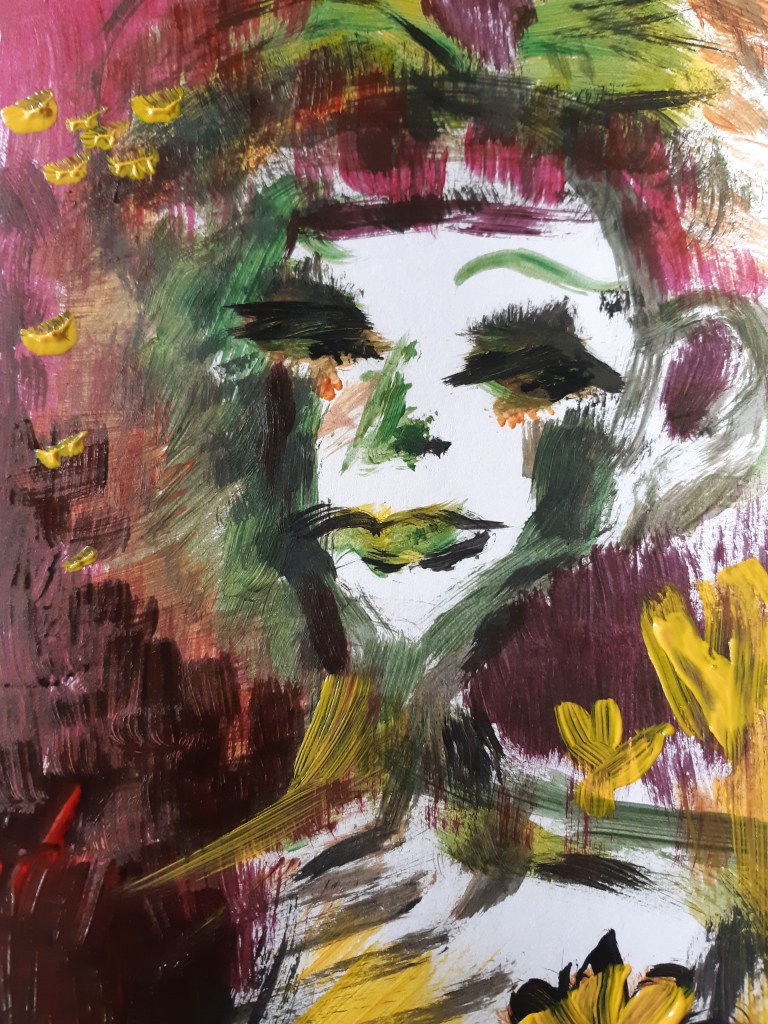
 Gabriella Florek